
What I’m looking for
What I buy, and how an honest valuation works.
I buy vintage baseball cards — singles, lots, and whole collections. Below is exactly what I’m after, what I’m not, how I arrive at a number, and a plain-English guide to figuring out what you have before you decide anything.
What I buy
- No.1
Pre-1980 baseball
1950s and 60s Topps and Bowman are the heart of it, but I’ll look at anything from the tobacco era through 1979 — Leaf, Play Ball, and the rest included. Complete or partial sets, star runs, team lots, loose commons, and the unsorted shoebox nobody’s been through. Hall-of-Famers and rookies of the era are where the value concentrates, but I want the commons too.
- No.2
Oddballs and regionals
This is the corner of the hobby I know best, and where I’ll usually pay the most. Venezuelan Topps, food and product issues (Post, Jell-O, Kellogg’s, Hostess), Red Man tobacco, regional and team sets, and other oddball printings. These are the cards most buyers can’t identify and most sellers undervalue — which is exactly why they’re worth showing me.
- No.3
Whole collections
Twelve shoeboxes in a garage isn’t a problem — it’s what I most want to see. I’d rather take the whole thing than cherry-pick the best cards and leave you to deal with the rest. And because I can price a collection against my own network of buyers rather than just eBay comps, I can often pay more for the full lot than a shop would.
- No.4
What I don’t buy
Nothing modern — roughly 1995 to today. That market is a completely different animal, and you’ll do better selling those elsewhere. I won’t make an offer on them, but send photos anyway and I’ll tell you honestly what you have and where it’s better sold — even when the answer is “not to me.”
Start here
How do I identify what I have?
Staring at a box with no idea what’s in it? You can learn a surprising amount just by looking. Here’s how to read your own cards the way a buyer does — and at every step, if you’re not sure, that’s exactly what the free valuation is for.
1. Figure out the era
Age is the biggest single signal, and it’s not gradual — value drops off a cliff around 1980. The year is usually printed on the back, sometimes the front. The cards below are just one example from each era; designs changed almost every year — a 1960 Topps looks nothing like a 1969 — so use them to get in the right ballpark, then check the printed year to place it exactly.
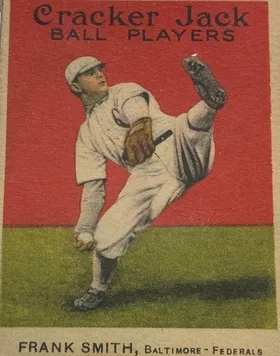 Pre-1948Pre-warSmall, often blank or text-only backs; tobacco, gum, and caramel issues. Rare survivors.Can be extremely valuable
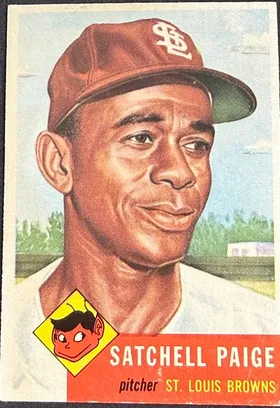 1948–69Golden ageClassic Topps, Bowman, Leaf. Thick stock, bold color. Where the real money tends to live.The sweet spot
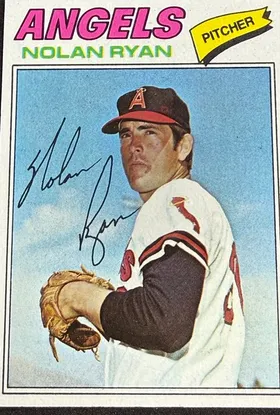 1970–79VintageColorful 70s Topps designs. Still genuine vintage; stars and high grades carry value.Often worthwhile
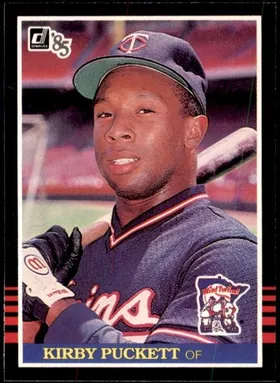 1980–86TransitionFleer and Donruss join Topps. Some real value, a lot of common.Mixed
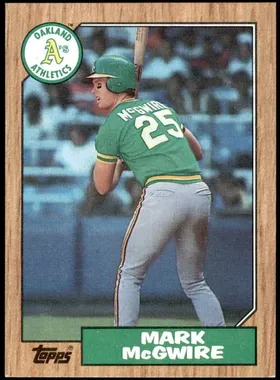 1987–94Junk waxPrinted by the billion and saved in mint condition. Usually worth cents — with a few exceptions.Mostly low value
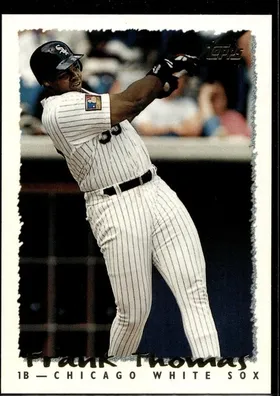 1995+ModernInserts, parallels, autographs, memorabilia. A different market I don’t buy — but will still advise on.Not for me
Tell for the big one: if most of your box is that wood-grain 1987 Topps look or shiny early-90s cards, temper expectations — here’s the honest truth about that era. If you’re seeing thick stock and 1950s–60s designs, pay attention.
2. Tell the brand
For decades there were only a handful of makers, and the logo is usually right on the front or back:
- Topps — the dominant brand from 1952 on. Most vintage you’ll find.
- Bowman — the other big early name (1948–55, revived later). Bowman rookies can be especially valuable.
- Leaf — a short-lived but important early maker (1948–49). Small sets, genuinely scarce, and often overlooked.
- Fleer — made cards in the 1950s and 60s too (the Ted Williams and star sets), then returned to mainstream baseball in 1981.
- Donruss — joined Fleer in the 1981 wave; its presence means the card is 1981 or later.
The oddballs are where value hides — and where people go wrong. Post cereal, Jell-O, Red Man Tobacco, Kellogg’s, Hostess, and Venezuelan Topps issues can be worth far more than a mainstream card of the same player, because so few survive. They’re also the hardest to identify, and the easiest to undervalue. If you see something that doesn’t look like a standard Topps card, don’t guess — send me a photo and I’ll tell you what it is.
3. Spot what actually matters
- Star players & Hall of Famers. Mantle, Mays, Aaron, Clemente, Koufax, Jackie Robinson, Ted Williams. One of these can outweigh the rest of the box.
- Rookie cards. A player’s first-year card is prized — often the most valuable card of a great player.
- Graded slabs. Any card sealed in hard plastic with a label (PSA, SGC, BGS) was authenticated because someone believed it mattered. Set those aside carefully.
- Oddball & regional. The less-flashy card can be the valuable one — scarcity beats shine.
4. Read the condition
For valuable cards, condition is most of the value. The same card can be worth $80 or $8,000. Four things to look at — and don’t try to “clean” or fix anything, because that only lowers value:
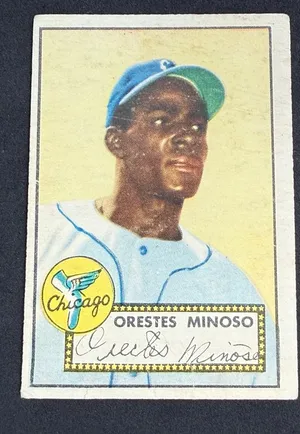 CenteringAre the borders even on all four sides, or is the image shoved toward one edge? (This one’s well off-center.)
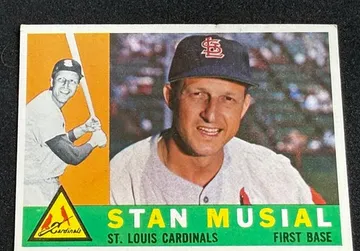
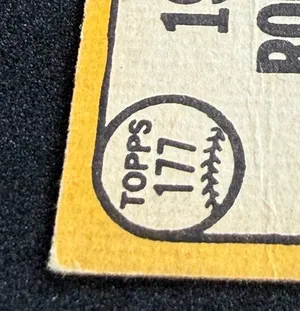 CornersSharp and square, or soft, rounded, and frayed? Zoom in.
 EdgesSmooth, or chipped and rough? White flecks on dark borders hurt.
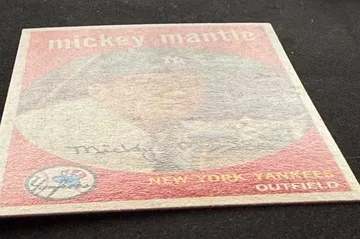 SurfaceTilt it under light — creases, scratches, and stains hide until you angle it.
Want the full version? Why most people misprice their cards walks through exactly what buyers and graders look for.
How I arrive at a number
How the valuation works.
- 1
You send photos
Fill in the valuation form with a rough description and a few clear, straight-on photos in good light — the fronts of anything that looks old, plus a wide shot of the whole lot. No need to sort, catalog, or clean anything (please don’t clean anything). For a big collection, a handful of representative photos is plenty to start.
- 2
I give you an honest read
Usually within 24 hours, and from me personally — not a template, not an automated number. I’ll tell you what era it’s from, what’s common, and what’s genuinely worth something, including anything that should be looked at more closely or graded before it’s sold to anyone.
- 3
I show my math
If you want to sell and it’s something I buy, I’ll make an offer and show you how I got there — what I think the cards sell for and what that leaves me. Because I can price against my own buyer network, that number is often higher than a shop’s. And if you’d clearly do better selling it another way — yourself, at auction, on consignment — I’ll say so and point you in the right direction.
“If your collection is worth more than I’d pay for it, I’ll tell you that — and I’ll tell you where to sell it.”
No cost and no obligation, and any offer is subject to seeing the cards in person or in clear photos — nothing here is a guaranteed price sight-unseen. Not sure how you want to sell? Here are all your options, honestly compared.