
Why Most People Misprice Their Baseball Cards

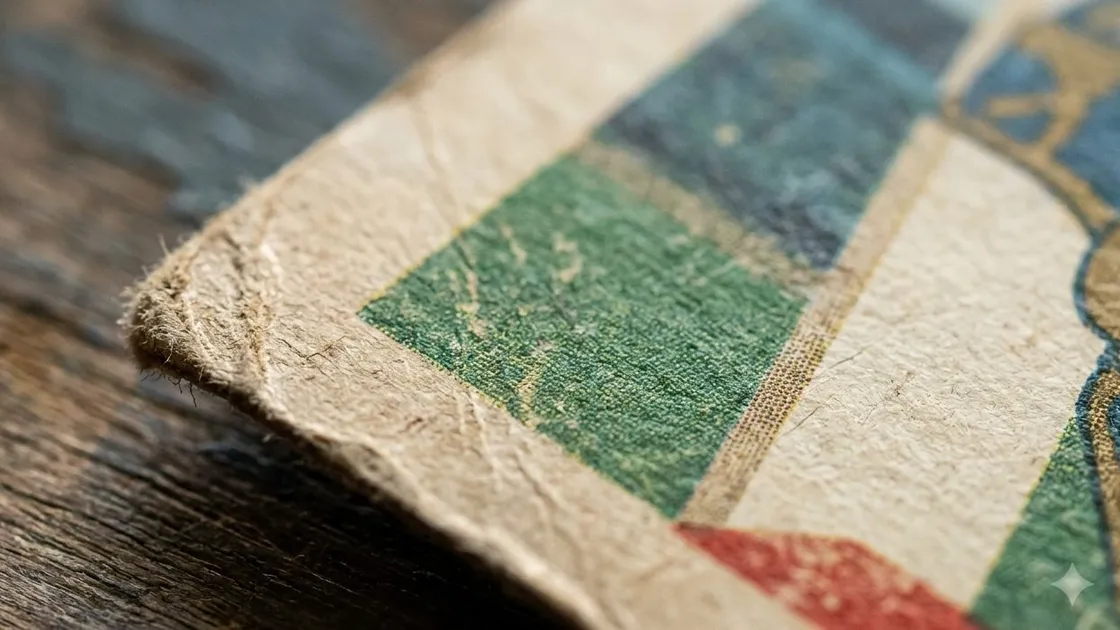
The most common thing I run into isn’t people being dishonest about their cards. It’s people being wrong about them, confidently, in both directions. They think the shiny one is the treasure and the dull one is filler, when it’s the other way round. They price off the player’s fame and skip straight past the thing that actually sets the value.
For vintage especially, condition is most of the value. Two copies of the same card, same year, same player, can be worth $80 and $8,000. Condition is the only difference. And condition is made of specific, learnable things that untrained eyes slide right past.
Here’s what buyers are actually looking at.
| Factor | What to look at | Watch for |
|---|---|---|
| Centering | Even borders on all four sides | Image shoved toward one edge |
| Corners | All four, up close | Soft, rounded, or frayed |
| Edges | Along every edge | Chipping; white flecks on dark borders |
| Surface | Tilt it under light | Creases, scratches, gloss loss |
| Eye appeal | The whole card at a glance | Flat color, a picture that doesn’t pop |
Centering
Look at the borders around the picture. On a well-centered card the border is even on all four sides. On a badly centered one the image sits toward an edge, sometimes far enough that the border nearly vanishes on one side and doubles on the other.
Centering gets described as a ratio: 60/40, 90/10, the percentage of border on each side. Sounds trivial. It isn’t. A beautifully centered vintage card can be worth several times an otherwise identical off-center one, because centering can’t be fixed and great centering on old cards is rare. Sellers overlook this more than anything else. Graders check it first.
Corners
Look closely at all four. A loupe helps, or your phone’s zoom. Sharp and square, or soft, rounded, frayed, dinged? Corners take the most abuse over decades, and sharp corners on a 60-year-old card are a big deal. One soft corner can cost two full grade points.
Edges
Run your eye along every edge. Chipping, roughness, small nicks, they all count. On cards with dark borders, and some sets are notorious for it, edge wear shows up as tiny white flecks and tanks the grade fast.
Surface
Now the face. Creases even faint ones, scratches, print defects, stains, gloss loss, and any indentation from something having pressed on it. Hold the card at an angle under a light. A crease you can’t see head-on will jump out sideways. Creases are among the most value-destroying flaws there are.
Detected by whom, though, is a fair question. Here’s what an altered card actually looks like up close, using a trimmed 1954 Aaron I ran into on a marketplace listing.
Eye appeal, the intangible that’s very tangible
Then there’s eye appeal, which sounds vague and isn’t. Does the card just look great? Rich color, strong focus, nothing distracting, a picture that pops. Two cards with identical technical grades sell for different money because one has presence and the other looks flat. It’s why experienced buyers want to see the card and not only its grade.
Why this trips people up
Three reasons, over and over.
They judge by fame, not condition. “It’s a Mantle, so it’s worth a fortune.” A creased, off-center Mantle is worth a fraction of a clean one. Still real money. Not the number in your head.
They can’t see the flaws. Centering and light creases stay invisible until somebody shows you how to look. After that you can’t unsee them.
They trust “it looks nice.” A card can look perfectly nice from across the room and carry three grade-limiting flaws up close. Meanwhile a slightly dull-looking card turns out technically flawless.
A card can look perfectly nice across the room and have three grade-limiting flaws up close.
Which is also why grading pays off for some cards and wastes money on others. The grade is just a formal reading of everything above.
What to do about it
Don’t clean, press, or “fix” anything. Every attempt to improve condition lowers it, and altered cards are worth far less once someone spots it. This matters enormously if you just inherited a collection.
Handle cards by the edges. Put the valuable ones in a penny sleeve and a top-loader, nothing fancier.
And compare like with like. When you look up a card’s value, match the condition, not just the card. That “sold for $2,000” listing was almost certainly a much nicer copy than the one in your hand. Occasionally yours is nicer than theirs.
The reason any of this is worth knowing before you sell: mispricing runs both directions, and a predatory buyer profits from your uncertainty specifically. When I look at a collection, I’ll show you my read on condition and how it drives the number, because a price you don’t understand is a price you can’t check.
Want a straight read on what your cards would really grade out to? Send photos, clear and straight-on in good light, and I’ll tell you what I see.
Key takeaways
- Condition is most of a vintage card's value — not just which player it is.
- Centering (even borders) is the single most overlooked factor.
- Corners, edges, and surface each move the grade; creases are especially costly.
- Eye appeal is real: two same-grade cards can sell for different money.
- Never clean, press, or 'fix' a card — it only lowers value.
Frequently asked questions
- What makes a baseball card valuable beyond the player?
- Condition. For vintage cards, centering, corners, edges, surface, and overall eye appeal decide most of the value — the same card can be worth many times more in high grade than in low grade.
- What is card centering, and why does it matter?
- Centering is how even the borders are around the image. Off-center cards are worth far less than well-centered ones, because centering can't be fixed and great centering on old cards is rare.
- Does a crease ruin a card's value?
- It hurts a lot. A crease — even a faint one visible only at an angle — is one of the most value-destroying flaws there is. Always check the surface under raking light.
- Should I clean my old baseball cards?
- No. You can't improve condition, and any attempt lowers it; altered cards are worth far less once detected. Handle by the edges and leave them as-is.