
Selling a Baseball Card Collection: Every Option, Honestly Compared

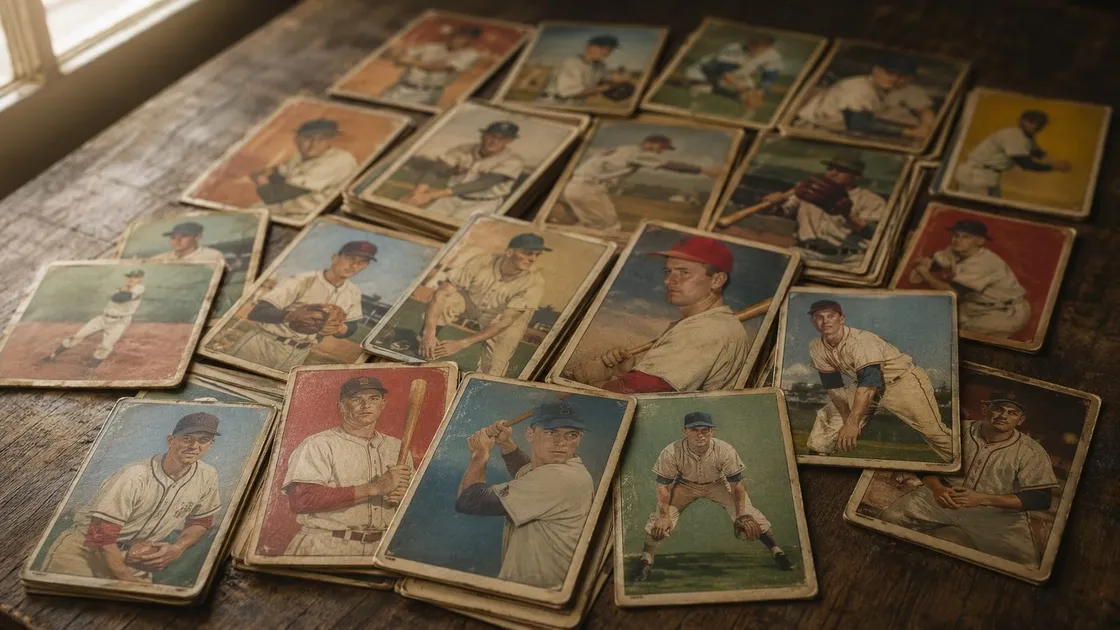
So you have a collection to sell. Maybe it’s yours, maybe you inherited it. Either way there’s a box, or twelve, and you’d like to turn it into money without getting cheated or losing the next two years of weekends to it.
There are really only six ways to sell a baseball card collection. Every one of them trades off how much you get against how much work it is and how long it takes. Nobody lays out all six honestly, because most people explaining your options are one of the options. So here’s the whole map, including the parts that don’t benefit me.
| Option | Payout | Effort | Speed | Best for |
|---|---|---|---|---|
| eBay (yourself) | Highest on good cards | High | Slow | A few valuable cards, if you have patience |
| Facebook / local | Medium | Medium | Fast | Selling bulk as a lot, locally |
| Local shop | Low–medium | Low | Instant | Speed and simplicity |
| Consignment / auction | Highest on rare cards | Low | Slow | One genuinely high-value card |
| Card show | Low–medium | Medium | Fast | If you’re going anyway |
| Private buyer | Medium–high | Very low | Fast | The whole collection, handled once |
1. Sell it yourself on eBay
Where the most money is, and where the most hours go.
eBay has the biggest pool of card buyers on earth, and for individual cards with real value it usually sets the highest price. Photograph, list, describe, assess condition, answer questions, pack, ship, card by card, and you will very likely net more than any single buyer pays you.
The catch is those three words: card by card. A 3,000-card collection isn’t one listing. It’s potentially hundreds of them, plus fees around 13% once the final value fee and payment processing are counted, plus shipping supplies, plus the genuine risk of chargebacks and “it arrived damaged.” When 90% of a collection is common cards worth a dollar or two, and for most collections it is, you can burn a month of evenings to net eighty dollars on the bulk. The money is in the handful of good cards, and those are the ones worth listing individually. I get into that math in selling it yourself vs. to a buyer.
Best for: people with time, patience, and a collection where a few cards carry most of the value.
2. Sell it yourself on Facebook
Marketplace and the buy/sell/trade groups move faster than eBay and cost less in fees. The buyers know that too, so offers run lower.
It’s a good channel for selling a collection as a lot. “Here’s 2,000 1970s commons, $300 for all of it,” to somebody local who’ll drive over. No shipping at all.
The downside is that it’s the wild west. Lowballers, no-shows, people who want to “come look” and then renegotiate in your driveway. If you go this way: sell in bulk, price firmly, meet somewhere public.
Best for: offloading bulk quickly and locally without shipping.
3. Craigslist and the local classifieds
Honestly? Much the same as Facebook, with fewer buyers, older buyers, shadier buyers, and no ratings to sort the good from the bad. Occasionally it surfaces a serious local collector. More often it surfaces someone who wants the whole collection for the price of the one card they spotted in your photo. A backup, not a plan.
4. Sell to a local card shop
Fast, simple, in person, cash in hand. Walk in, they look, they make an offer, you leave with money. No shipping, no fees, no waiting.
You pay for that in price. A shop has rent, staff, and a case full of cards that aren’t moving, so it buys to resell and offers a fraction of retail, often 40 to 60% of what the cards eventually bring. That isn’t necessarily anyone cheating you. It’s the business model. It does mean a shop is rarely your best price, especially on a collection with real vintage in it.
Best for: speed and simplicity when you’d rather be done than optimize.
5. Consignment (local shop or national auction house)
With consignment you don’t sell to anyone. You hand your cards to someone who sells them for you and takes a cut, typically 15 to 25%, sometimes more, sometimes less on high-value lots. A national house like Heritage or Goldin can reach world-record prices for a rare card, because their buyers are the deepest-pocketed collectors alive.
The trade-offs: it’s slow, since auctions run on a calendar and you wait for the cycle and then the payout. It only makes sense above a certain value. And the fees plus the wait can surprise you. Consignment is right for the one incredible card and wrong for a shoebox of commons. I wrote a whole piece on how consignment actually works.
Best for: a small number of high-value cards you’re not in a hurry to sell.
6. Sell to a private buyer (someone like me)
A private collector-buyer sits between the shop and doing it yourself. One offer, in person or from photos, for the whole collection or whichever parts you want to sell. No listing, no shipping, no fees, no waiting. A private buyer carries no storefront overhead, and one who knows vintage cards can price against real demand instead of guesswork, so a good one often pays more than a shop for the same collection.
The honest catch is that this option lives or dies on trust. A private buyer can pay more. A predatory one will pay far less and count on you not knowing the difference. The reason my name is on all of this is that the only way it works long-term is to be the buyer who tells you the truth, including the times you’d do better somewhere else on this list.
Best for: whole collections, especially vintage, when you want it handled once, fairly, without becoming an eBay seller.
So which one is right for you?
Three questions.
How much is your time worth here? If the answer is “not much,” you’re really choosing between a shop and a private buyer.
Is the value spread across thousands of cards or concentrated in a few? Spread out means sell as a lot. Concentrated means the good cards deserve eBay or consignment and the rest can go bulk.
And do you actually know what you have? If not, don’t sell anything to anyone yet. Here’s how to tell if your collection is valuable.
There's no universally right answer — there's a right answer for your collection and your patience.
Usually it’s a combination anyway. The good cards one way, the bulk another.
Key takeaways
- There are six real options: sell yourself (eBay, Facebook, Craigslist), a local shop, consignment, a card show, or a private buyer.
- eBay nets the most on individual valuable cards — but the fees and hours are real, and bulk commons aren't worth listing one by one.
- Shops and card shows are fast but pay wholesale, and you're negotiating from the weaker position.
- A good private buyer can often pay more than a shop, because there's no storefront overhead built into the offer.
- For most collections the smartest play is a hybrid: sell the few great cards one way, the bulk another.
Frequently asked questions
- What's the best way to sell a baseball card collection?
- It depends on where the value sits. Individual high-value cards usually do best on eBay or at a national auction; bulk commons sell best as a single lot; and a whole mixed collection is easiest to sell at once to a private buyer. Most people net the most with a combination.
- Where can I sell baseball cards for the most money?
- For a single valuable card, eBay or a national auction house typically brings the highest price because they reach the most buyers. For everything else, the 'most money' option is usually the one that doesn't quietly eat your return in fees and hours.
- Is it better to sell cards to a shop or online?
- A shop is faster and simpler but pays wholesale so it can resell at a profit. Selling online nets more on good cards but costs you fees, shipping, and time. A collection with a few valuable cards often splits the difference: sell those online, sell the bulk to a buyer or shop.
- How do I sell a whole collection at once?
- Sell it as a lot — either to a private buyer who'll take the whole thing (often the best price, since there's no storefront markup) or a local shop. Get an honest valuation first so you know what's actually in it before you accept any offer.