
Selling at a Card Show: What It's Really Like

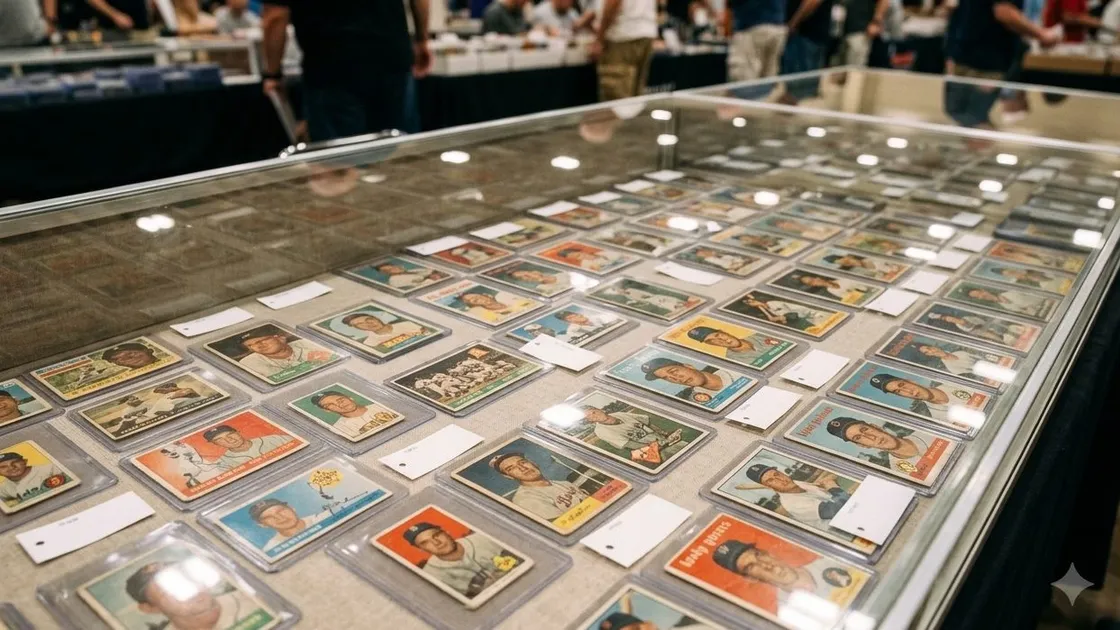
A card show sounds like the obvious place to sell a collection. A room full of dealers who buy cards. Surely one of them gives you a fair price, and you can shop it around to a few others besides.
It’s one of the ways to sell, and now and then it’s a decent one. Mostly it works out worse than people expect. Here’s why, before you spend a Saturday hauling boxes around.
What a card show actually is
A room, usually a hotel ballroom or a convention center or a fairground hall, rented out to dealers who set up tables to sell cards. Some of them will also buy. There are big national shows and small local ones, and admission runs a few dollars. In Central Florida, Florida Trading Card Shows is the account I follow for dates. You walk the floor, and if you’re selling, you carry your cards table to table looking for someone interested.
Which is the first reality check. Shows exist so dealers can sell to collectors, not so the public can sell to dealers. Buying from walk-ins is a side activity for most tables, and they treat it like one.
| A show can work when… | Skip it when… |
|---|---|
| You’re going anyway and enjoy it | You want top dollar |
| You have specific mid-value cards | You’re selling a whole collection |
| You just want a quick market read | You have high-grade vintage |
| — | You don’t yet know what you have |
What happens when you try to sell there
You’re negotiating from a weak position. You hauled your cards to them, in a room full of their competitors, and you clearly want to sell today. The dealer can see all three of those things. It’s the exact inverse of the leverage you have when a buyer comes to your kitchen table.
They’re buying to flip it, sometimes within the hour. A dealer buying your card wants to resell it, often that same weekend at that same show. So the offer has to cover their margin plus table costs, travel, and time. Wholesale of wholesale.
They’ll cherry-pick. Most walk-in offers target the handful of good cards and wave off everything else. You arrive with a collection and leave having sold the three best pieces for less than they’re worth, still carrying the rest.
And shopping it around helps less than you’d hope. Sure, you can visit five tables. But dealers at one show tend to land in the same range, and by the fourth table you’re tired, it’s late, and that first lowball has started to look reasonable. The format wears you down. That’s not an accident.
When a show does make sense
In fairness, there are real cases.
You enjoy the hobby and were going anyway. Wandering a card show is a good afternoon, and selling a few cards while you’re there is a fine bonus.
You have specific mid-value cards and the patience to shop them properly. Every so often a dealer who specializes in exactly what you have pays a strong price, because it fits what their own customers want.
Or you want a fast read on the market. Even if you sell nothing, watching a few dealers react to your cards tells you something. Just remember they’re reacting as buyers, not as appraisers.
What a show is not good for
Selling a whole collection, for one. No dealer at a show wants your 2,000 commons, so you’re right back to selling the good cards and keeping the rest.
Getting top dollar, for another. The format favors the dealer structurally, and no amount of haggling fixes that.
And high-grade vintage. Your best cards deserve better than a rushed offer across a folding table. They deserve the right channel for each one, whether that’s grading, consignment, or just a proper valuation first.
The honest comparison
A card show is selling to a shop, except you did the driving, carried the risk of walking around a public building with valuable cards in a bag, and negotiated in the least favorable setting available.
If you want convenience, a private buyer who comes to you is easier and usually pays better. If you want top dollar on a great card, consignment or selling it yourself beats a walk-in show offer nearly every time.
A card show is selling to a shop — except you did the driving and negotiated in the least favorable setting possible.
The one thing I’d never do is bring a collection to a show before knowing what’s in it. That’s how the great card goes across a folding table for the price of a good one.
So before you load up the car, send me some photos. I’ll tell you what you’ve got and whether a show is even worth your Saturday. If it isn’t, I’ll tell you what would actually get you the most.
Key takeaways
- Shows are built for dealers to sell to collectors — buying from walk-ins is a side activity.
- You negotiate from the weakest position: you hauled the cards in and clearly want to sell today.
- Dealers buy to resell (often that weekend), so offers are wholesale-of-wholesale.
- They cherry-pick the few good cards and wave off the rest — you leave still holding the bulk.
- Fine if you're going anyway; for top dollar or a whole collection, other routes beat it.
Frequently asked questions
- Can I sell my baseball cards at a card show?
- Yes, some dealers buy from walk-ins — but it's a side activity for most tables, and shows are set up primarily for dealers to sell to collectors, which puts you in a weak negotiating spot.
- Will dealers at a card show pay a fair price?
- They pay wholesale, because they're buying to resell — often at the same show. Add their table costs and travel and the offer is wholesale-of-wholesale, rarely your best price.
- Does shopping my cards around the show help?
- Less than you'd think. Dealers at one show tend to pay in the same range, and the format wears you down — by the fourth table the first lowball starts to look fine.
- What's a better way to sell than a card show?
- For convenience, a private buyer who comes to you is easier and usually pays more. For top dollar on a great card, selling it yourself or consigning it beats a rushed walk-in offer.