
Sell Your Cards Yourself, or to a Buyer? An Honest Breakdown

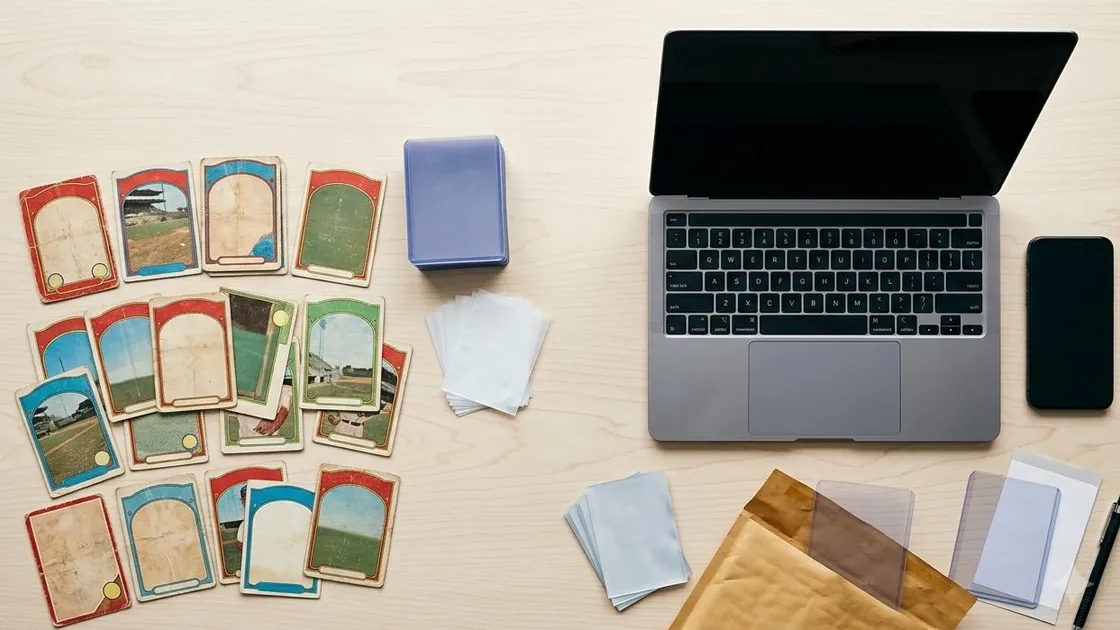
Once you know roughly what you have, the fork in the road is this. Do you sell the collection yourself, piece by piece, or take one offer from a buyer and be done with it?
“Sell it yourself, you’ll make more” is the advice everybody gives. It’s often true. It’s also badly incomplete, because it quietly ignores what your time is worth and what actually happens when you try. So let’s do the real math.
| Sell it yourself | Sell to a buyer | |
|---|---|---|
| Payout | Highest on good cards | Fair — higher from a private buyer than a shop |
| Fees | ~13%+ (eBay) + shipping | None |
| Your time | 15–30 min per card | One conversation |
| Speed | Weeks to months | Same day |
| Best for | A few valuable cards | The whole collection at once |
The case for selling it yourself
List your own cards, mostly on eBay, mostly the individual ones with real value, and you capture full retail instead of a buyer’s wholesale offer. On the good cards that difference is significant. Nobody is going to pay you retail for a card they then have to resell; the gap between wholesale and retail is their margin, and selling direct means that margin is yours.
For a collection where a few cards carry most of the value, listing those specific cards yourself is usually worth it. I’ll tell anyone that.
The part the advice leaves out
Here’s what “just sell it yourself” skips over.
Fees. eBay’s final value fee plus payment processing runs roughly 13%. Your “full retail” is down an eighth before you’ve bought a mailer.
Time, which is the big one. Every card is a photograph, a condition assessment, a written description, a listing, buyer questions, packing, and a trip to the post office. Call it 15 to 30 minutes each, done properly. A collection with 40 sell-worthy cards is 10 to 20 hours, spread over weeks or months as they sell. Or don’t.
The bulk problem. Most collections are 90% common cards worth a dollar or two. You can’t list those one at a time, so they end up sold as lots for pennies a card anyway. The “sell it yourself” upside only ever applied to the small valuable slice.
Risk and hassle. Chargebacks, “it arrived damaged,” returns, the occasional outright scammer. Manageable. Also real.
Put it together and the honest picture looks like this: selling yourself nets more on the good cards, roughly the same as a lot sale on the bulk, in exchange for a meaningful piece of your life.
The case for one offer from a buyer
Selling the whole collection to a private buyer, or a shop, trades some top-line dollars for a lot of convenience. One transaction. No fees, no shipping, no listings, no waiting. You hand it over and you’re done that afternoon.
The question is how much you’re giving up for that. With a shop, usually quite a lot, since they price to resell out of a storefront. With a good private buyer, often surprisingly little. No storefront overhead sits in the offer, and someone who knows the cards can price against real demand rather than guesswork, sometimes even pricing in the grading upside you’d never have captured on your own. I break down all the channels in every way to sell a collection.
A rough way to decide
Ask yourself three things.
What’s an hour of your time worth, and how many hours is this? If selling yourself nets $600 more but costs 20 hours, that’s $30 an hour of fairly tedious work. Some people would take that happily. Others obviously wouldn’t.
Do you actually enjoy this, or dread it? Some people find selling cards fun. If that’s you, sell it yourself. If the thought exhausts you, that’s a real cost and it belongs in the math.
And is the value concentrated or spread out? Concentrated in a few cards means sell those yourself and bulk the rest. Spread across thousands of commons means a lot sale saves you from a soul-crushing amount of listing for very little gain.
The honest hybrid
For a lot of collections the smartest answer isn’t either/or. Sell the two or three great cards yourself, or consign them, and sell everything else as one lot to a buyer. You capture the top-end upside where it’s worth the effort and skip the effort where it isn’t.
Sell the two or three great cards yourself; sell everything else as one lot.
That’s the kind of recommendation a straight valuation gives you. Send me photos and I’ll tell you which cards are worth your time to sell yourself and what I’d pay for the rest, including when the answer is “handle these three on your own, they’re worth more than I’d pay.” That’s not me being nice. It’s the only way to still be the person you call next time.
Key takeaways
- Selling yourself captures full retail on good cards — real money on the top end.
- But eBay fees run ~13%+, and every card is photos, listing, packing, and shipping.
- Most of a collection is common; those sell as a lot either way, so the DIY upside is only on the few good cards.
- A good private buyer has no storefront overhead, so the convenience costs less than you'd expect.
- The honest hybrid: sell (or consign) the two or three great cards; sell the rest as one lot.
Frequently asked questions
- Is it worth selling baseball cards on eBay myself?
- For a few valuable cards, yes — you'll usually net more than any single buyer pays. For bulk commons, no; the fees and hours outweigh what they bring, so those are better sold as a lot.
- How much are eBay fees for selling cards?
- Roughly 13%+ once you count the final value fee and payment processing, before shipping supplies — so your 'full retail' is smaller than the sale price suggests.
- Do card shops rip you off?
- Not necessarily — a shop pays wholesale because it resells out of a storefront, which is the business model. It's rarely your best price on vintage, but it's fast. A private buyer can often pay more.
- What's the easiest way to sell a whole card collection?
- One offer from a buyer (or shop) for the whole lot — no fees, shipping, listings, or waiting. You trade some top-line dollars for handling it once; a knowledgeable private buyer narrows that gap.