
Who Buys Baseball Cards? How to Find a Buyer You Trust

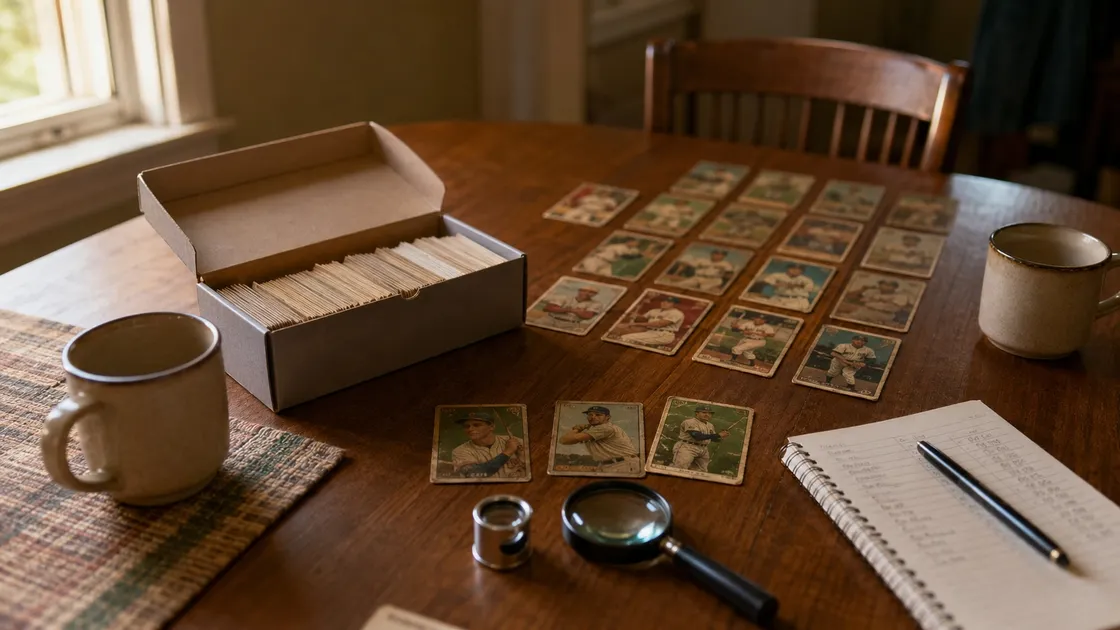
Once you have a rough idea of what your collection contains, the next question is who’ll buy it. Search around and you’ll turn up plenty of people willing to take baseball cards off your hands. That part is easy.
The hard part is that the same collection can fetch wildly different money depending on who’s looking at it. And the people most eager to buy fast are not always the ones who’ll treat you well.
I should say up front that I’m one of these buyers. The test I’d want you to hold me to is at the bottom.
| Buyer | Typically pays | Best for | Speed |
|---|---|---|---|
| Local card shop | Wholesale | Convenience, a quick answer | Same day |
| Dealer at a card show | Wholesale, cherry-picked | Almost nothing, honestly | Same day |
| Online / mail-in buyer | Lowest | Bulk modern, if you must | 1–4 weeks |
| National auction house | Highest on trophy cards | One great card | 2–6 months |
| Private local buyer | Varies most: best or worst | A whole mixed collection | Same day |
The local card shop
The obvious first stop, and a reasonable one. A shop will look at your cards, make an offer, and pay you today.
What you’re trading away is price. A shop resells out of a storefront with rent, staff, and cases to fill, so the offer has to leave room for all of that. That’s the business model rather than a trick, and a good shop will tell you so.
It does mean a shop is rarely top dollar on vintage. Worth asking about too: a lot of Florida shops lean modern, because that’s where the foot traffic is. If your collection is 1950s and ’60s cards, ask directly whether vintage is something they handle. A shop that mostly moves current product will price your old cards cautiously, not because they’re lowballing you but because it isn’t their market.
One thing in your favor: many shops would rather buy the whole box than pick through it.
The dealer at a card show
I’ve written a whole post on why selling at a card show usually disappoints, so I’ll keep this short. A show is built for dealers to sell to collectors, not for you to sell to dealers. You hauled the cards in. You clearly want to sell. The dealer knows both of those things before you open your mouth.
Show dealers also buy to resell, often that same weekend at that same show, so offers land at wholesale-of-wholesale. And they cherry-pick. They’ll take the four cards worth having and wave off the rest, which leaves you carrying most of your collection back to the car.
The online or mail-in buyer
Companies that advertise for collections by post are built for convenience and priced accordingly. You ship your cards, they assess them, they send you an offer.
Two things to weigh before you tape the box shut. You’re shipping irreplaceable items to someone you’ve never met, before any money changes hands. And the offer arrives once they already have your cards, which is the weakest spot you can negotiate from. “Send them back, then” costs you postage both directions and a couple of weeks.
Some of these operations are perfectly straightforward. It’s still the channel where I’d be most careful, and the last one I’d use for anything valuable.
The national auction house
For a single card worth thousands, an auction house is often your best outcome. They reach the deepest pockets in the hobby, and competitive bidding on a scarce card in high grade can end up somewhere no private offer will.
The trade-offs are real: commission, months of waiting, and no floor. An auction discovers a price, it doesn’t promise one. It’s also the wrong tool entirely for a shoebox of commons, which no auction house wants. If your best card deserves that route, here’s how consignment works.
The private local buyer
A collector who buys directly. No storefront, no staff, no cases to fill, so that overhead isn’t sitting inside the offer. On vintage especially, a private buyer can pay more than a shop for the same cards, because knowing the cards is most of the job.
That’s the upside. The downside is that this is the least regulated corner of the market. Nothing stands behind the person, there’s no company to complain to, and the range runs from the best offer you’ll see to the worst one. Which is what the rest of this post is for.
What a good buyer does
Forget the categories. Across all five, four behaviors separate a fair buyer from one to walk away from.
They look before they quote. A real assessment takes time, because condition decides most of a vintage card’s value and you can’t judge condition from across a table. A number offered before anyone has properly looked came out of the air.
They show their math. This is the big one. A fair buyer tells you roughly what they think the cards sell for, what they’re offering, and that the difference is their margin. Nobody can buy at retail and eat; they’d make nothing. But they should be willing to say the gap out loud.
They also take the whole thing, good cards along with ordinary ones, so you aren’t left holding a remainder that just got harder to sell.
And they’ll tell you when to sell elsewhere. If one card in your box would do far better at auction than in any private sale, the person who says so is the one worth trusting with the rest of it.
A fair buyer tells you what the cards sell for, what they're paying, and that the difference is their margin.
The red flags
- A number before they’ve really looked. Especially a confident one.
- Urgency. “This offer is today only.” Cards don’t spoil. Pressure to decide now is pressure applied for somebody else’s benefit.
- Cherry-picking, then losing interest in the rest.
- Vagueness about resale. Someone who won’t say what they’d sell your cards for is dodging the one question that reveals whether the offer is fair.
- “It’s all junk wax, but I’ll take it off your hands.” Sometimes true! Also the oldest way there is to buy a good collection cheap. Plenty of it may be worth very little, but that should be shown to you, not asserted at you.
- Framing the purchase as a favor. It’s a transaction. Both sides should come out fine.
Five questions worth asking
- What will you do with these cards after you buy them?
- How did you arrive at that number?
- Will you take the whole collection, or only the best cards?
- Can you show me what a couple of these have recently sold for?
- Is there anyone you’ve bought from before that I could talk to?
None of those are hostile, and a good buyer will happily answer all five. Watch the reaction to question two. It tells you most of what you need.
Judging me by the same standard
I buy vintage baseball card collections, mostly 1975 and older, here in Central Florida. Everything above applies to me, and you should hold me to it.
In practice: I’ll tell you what I think your cards are worth and what I’d pay, and I’ll show you how I got there. I take the ordinary cards along with the good ones. If something in your collection would net you more somewhere else, sold yourself or sent to auction, I’ll say so and tell you how.
That last one costs me deals. It’s also the whole business. This trade runs on what people say about you afterward, and the estate world especially is a small room. Send me photos and a rough description and I’ll give you an honest read within a day, whether or not you ever sell me anything. Or if you’d rather just see what these cards tend to go for first, the range explorer is here.
Key takeaways
- Shops and show dealers are fast but pay wholesale — they resell out of overhead.
- Auction houses net the most on a single trophy card, and are the wrong tool for a shoebox.
- Online mail-in buyers are the most convenient and usually the lowest, and you ship first.
- A good private buyer often pays the most outside of auction, and is the least regulated — vet them.
- The test isn't the type of buyer. It's whether they look first, show their math, and take the whole collection.
Frequently asked questions
- Who buys baseball cards near me?
- Usually a local card shop, dealers at a nearby card show, and private collectors who buy directly. Shops and shows are easy to find by searching; private buyers are worth seeking out because they carry no storefront overhead and can often pay more for vintage.
- Who pays the most for baseball cards?
- For one genuinely high-value card, a national auction house typically nets the most. For a whole mixed collection, a knowledgeable private buyer usually beats a shop, because a shop is pricing to resell out of a storefront.
- How do I know if a baseball card buyer is ripping me off?
- The clearest signal is whether they'll explain their number. A fair buyer tells you what they think the cards sell for and what they're paying, and the gap is their margin. A buyer who won't show that math, or who quotes before really looking, is the one to walk away from.
- Should I sell my cards to a shop or a private buyer?
- A shop is faster and simpler and pays wholesale. A good private buyer can pay more for vintage, but there's no storefront standing behind them, so ask for references and check they'll take the whole collection rather than only the best cards.