
I Inherited a Baseball Card Collection — What Do I Do?

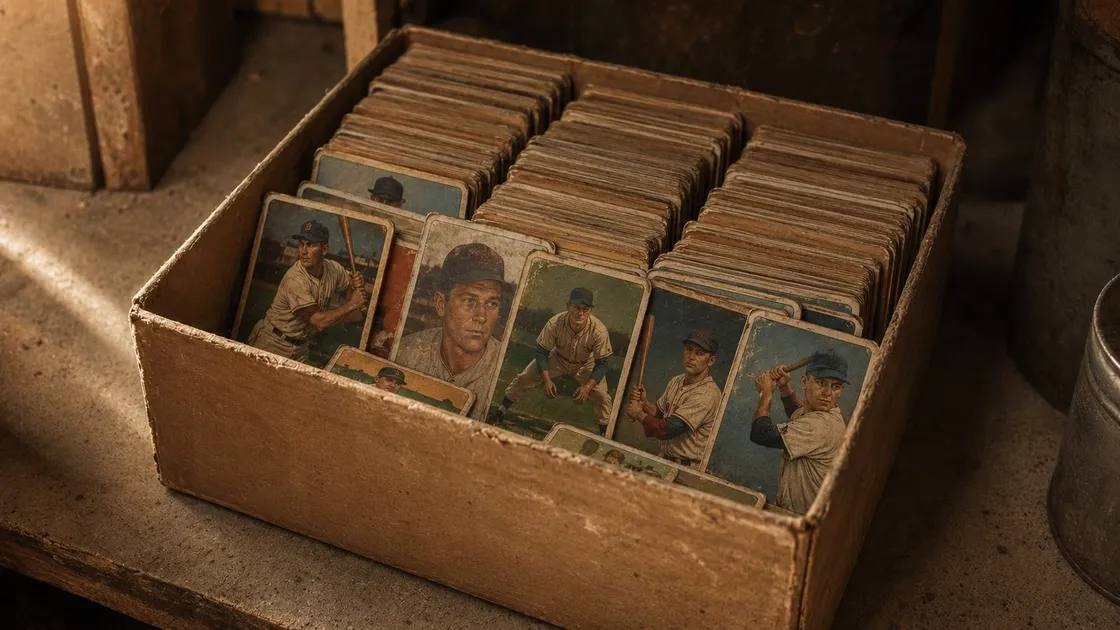
Someone you loved collected baseball cards, and now the collection is yours. Maybe a few binders. Maybe a closet full of shoeboxes you had no idea were in there. Either way you’re probably feeling two things at once. You don’t want to just throw it away, and you have no idea what it’s worth or what you’re supposed to do with it.
First, take a breath. Cards are cardboard. They’ve survived this long and nothing about them is urgent. You don’t have to decide anything today. The worst outcomes in this hobby happen when somebody rushes, and the people who benefit from that rush are counting on it.
Here’s the calm version, in order.
Step 1: Don’t throw anything away, and don’t “clean” anything
The instinct to tidy up is the most expensive instinct there is.
Don’t wipe cards down. Don’t move them into fresh sleeves. Don’t spend an evening hand-sorting them. And please don’t try to fix a bent corner. On a valuable card condition is most of the value, and a well-meaning cleaning can turn a $2,000 card into a $200 one. I explain why in why most people misprice their cards.
That goes for the stuff that looks like junk, too. Empty boxes, wrappers, team-issued oddities, the beat-up album nobody would look twice at. Some of it is worth real money to the right person. Leave it where it is.
Step 2: Look for the obvious signals of age and care
You can learn a lot without touching much.
How old are they? Pre-1980, and especially the 1940s, 50s, and 60s, is where real value tends to live. Cards from the late 80s and early 90s were printed by the billion and are usually worth very little however perfect they look. Here’s the honest truth about that era.
How were they stored? Binders, top-loaders, and proper boxes mean somebody who understood value looked after them. Good sign. A shoebox in an attic isn’t a bad sign, just an unknown one.
Any cards in hard plastic cases with a label? Those are graded cards, from PSA or SGC or BGS, and somebody paid to have them authenticated because they believed they mattered. Set those aside carefully.
You’re not valuing anything yet. You’re getting a feel for what’s in front of you.
Step 3: Resist the two opposite mistakes
Inheritors tend to make one of two errors, and they pull in opposite directions.
Overestimating. “Dad said this was worth a fortune.” Sometimes true. More often the fortune was one or two cards and the rest is sentimental. Television and viral headlines have everyone convinced their box is the box.
Underestimating. “It’s just old cardboard, take it away.” This is how a great card ends up in a fifty-cent bulk lot at a garage sale.
The cure for both is the same: find out what you have before you sell any of it. I wrote a full guide on how to tell if an inherited collection is valuable.
Step 4: Get an honest read before you get an offer
Here’s the trap. The fastest way to find out what a collection is worth is to show it to a buyer, and a buyer has every incentive to tell you it’s worth less than it is. That’s the whole problem inheritors face, and it’s why predatory buying exists in this hobby at all.
So separate the two steps. Get a valuation, meaning an honest read of what’s there and what it’s worth, from someone whose reputation depends on being right. Then, afterward, entertain offers. A good buyer will happily tell you when to sell somewhere else, because the buyer who tells the truth is the one who gets called back. And if the first person you talk to is pushing you to sell today, that has told you what you need to know about them.
Get an honest read before you get an offer — the two are different steps, and rushing them together is how people get cheated.
Step 5: Decide how you actually want to sell
Once you know what you have, you can pick a route, and there are more of them than “take it to a shop.” Sell it yourself. Sell as a lot. Consign the great pieces. Sell the whole thing to a private buyer in one clean transaction. Each has real trade-offs, and I laid them all out in every way to sell a collection, honestly compared.
A note on the part that isn’t about money
A lot of inherited collections come with grief attached. The cards were a person, and letting them go is its own thing, separate from the dollars.
There’s no right timeline for that. Anyone worth dealing with will understand if you need to sit with it a while, or if you want to keep a few cards that mattered to him and sell the rest. You’re allowed to do that.
When you’re ready, and not before, send some photos and a rough description. I’ll tell you honestly what’s there, what it’s worth, and the smartest way to sell it, whether or not that’s to me. No cost, no pressure, no clock.
Key takeaways
- Don't clean, sort-scrub, or 'fix' anything — it almost always lowers value.
- Look for age signals: pre-1980 (especially 1950s–60s) is where value tends to live.
- Avoid both traps — over-estimating ('Dad said it's a fortune') and under-estimating ('just old cardboard').
- Get a valuation before you entertain any offer; the two are different steps.
- Once you know what you have, choose how to sell it — there are more options than a card shop.
Frequently asked questions
- I inherited baseball cards — where do I start?
- Start by doing nothing hasty. Don't clean or toss anything, get a rough sense of the era and condition, and get an honest valuation before you accept any offer. Cards aren't perishable, so there's no reason to rush.
- Should I clean or organize inherited cards before selling?
- No. Cleaning or 'fixing' a valuable card can slash its value, and even heavy sorting risks damage. Leave everything as you found it — including empty boxes, wrappers, and albums, which can have value too.
- How do I know if inherited cards are worth anything?
- Age, the players pictured, condition, and scarcity all matter. Most collections hold a lot of common cards and a few valuable ones; the goal is identifying the few before you sell. An honest valuation is the fastest way to find out.
- Should I just take them to a card shop?
- A shop is fast but pays wholesale, and it can't tell you what you're giving up if you don't already know what you have. Get an independent, honest read first so any offer — from a shop or anyone else — can be judged.