
Should You Get Your Baseball Cards Graded Before Selling?

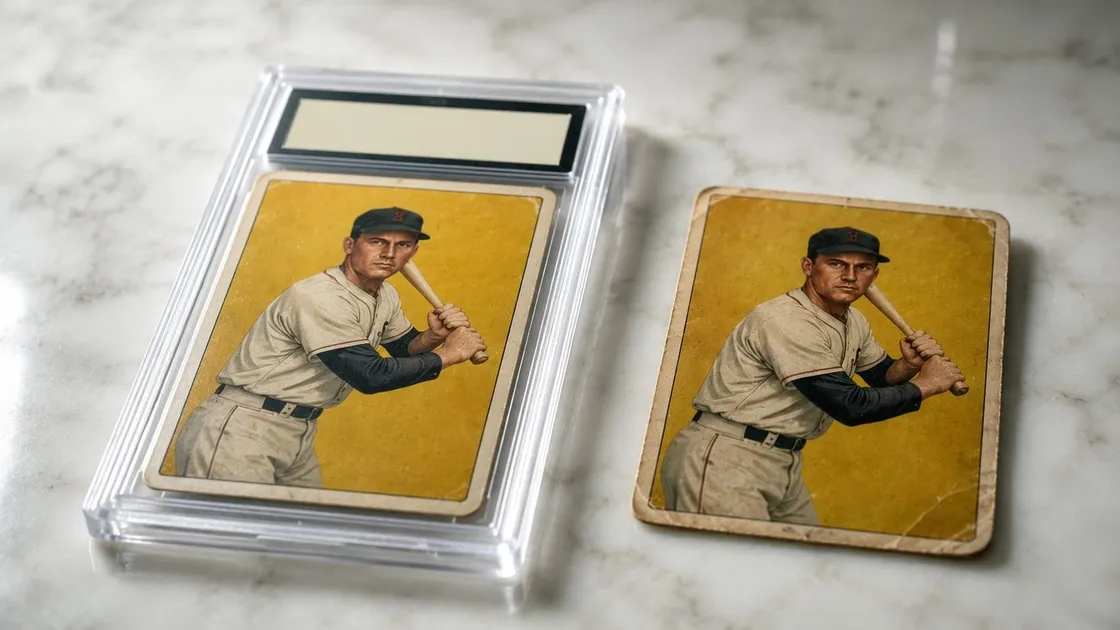
Somewhere along the way somebody told you to get your cards “graded” before selling. Sometimes that’s great advice. Just as often it’s a good way to spend hundreds of dollars and end up with cards worth less net than before you started. The difference comes down to a few specifics, and nobody selling grading services has much reason to explain when not to do it.
What grading actually is
You send a card to a company. PSA, SGC, and BGS are the big three. They authenticate it, confirming it’s real and unaltered, assign a condition grade from 1 to 10, and seal it in a tamper-evident plastic case, a “slab.” Buyers trust that grade, so a graded card sells with far less haggling than a raw one, and a high grade can multiply the price.
The catch is threefold. Grading costs money, typically $15 to $75 or more per card depending on service level and declared value. It takes weeks to months. And the grade you hope for is not necessarily the grade you get.
Quick version of when it pays:
| Grade it when… | Skip grading when… |
|---|---|
| It’s a key player | It’s a common name, however clean the card |
| Authenticity or alteration is in question | The card is plainly real and untouched |
| You’re keeping it and want it protected | You’re selling it soon and it’s modest value |
| The card’s value clears the fee several times over | You have hundreds of cards to do |
When grading is worth it
Three reasons hold up. Only one of them applies most of the time.
It’s a key player. This is the reason that pays. A Mantle, a Clemente, an Aaron, a rookie card people actively hunt for. Those are the cards where a buyer wants certainty before spending real money, and the slab supplies it: the grade is agreed on before anyone negotiates, and the pool of buyers willing to bid is much wider. On a $600 card, that certainty is worth more than the fee. On a $20 card it isn’t, no matter how sharp the corners are.
Authenticity or altered state is in question. Vintage attracts fakes, and it attracts doctoring — trimmed edges, recolored corners, pressed creases. If a card is valuable enough that a careful buyer would reasonably pause and wonder, the thing you’re paying for is the authentication, not the number on the label. A slab ends that argument before it starts. Here’s what fakes and alterations actually look like.
You want to preserve it. This one has nothing to do with selling. If a card is staying in your family, the slab is real protection — sealed, rigid, no more handling, no more shoeboxes and rubber bands — with a grade attached as a bonus. Grading to keep is a perfectly good reason to grade. Just be clear with yourself that that’s what you’re doing, because it isn’t a money decision.
Notice what isn’t on that list: only grade it if it’ll come back a 9 or a 10. That’s advice about modern cards, and it gets repeated as if it applies to everything. It doesn’t apply to vintage. Cardboard from the 1950s and ’60s was cut, printed, and handled in ways that make high grades genuinely rare — a 1955 Topps in a 5 is an ordinary, perfectly sellable card, and on some vintage issues a 7 is about as good as anyone finds. Waiting for a 9 on vintage mostly means never grading anything. Who’s on the card drives the value far more than where the grade lands.
On vintage, who's on the card matters more than whether it grades a 9.
When grading is a mistake
Don’t grade a common or low-value card. Spending $25 on a card worth $10 is lighting money on fire, and most of a typical collection lives here.
Don’t grade a common name just because the card looks great. A gorgeous 1962 Topps common is still a common, and a number on the label doesn’t change who’s on the front.
Don’t grade hundreds of cards. Fees and labor stack up fast and you’d be paying to slab a pile that never justified it.
And don’t grade a card whose value you’re guessing at. If you don’t know roughly what it’s worth raw, you can’t know whether the fee is worth paying. Here’s why cards get mispriced in the first place.
The mistake that costs the most
Here’s the trap. People look through the collection, pick the cards that look nicest to them, and send those off.
But “looks nice to me” and “worth grading” are different things. Eye appeal is the wrong filter. The card that deserves the fee is usually the one with the right name on it, or the one a buyer would question, and neither of those has much to do with which card is prettiest in the box. So the sharp common goes off to be slabbed while the beat-up star, the one where the slab would actually have earned its keep, gets sold raw and cheap.
Choosing which cards to grade is a skill, and getting it wrong costs you twice: you pay to grade cards that won’t earn it back, and you sell the ones that would have, ungraded and underpriced.
A simpler path for most sellers
Selling a whole collection? You usually don’t need to grade anything yourself.
A knowledgeable buyer already prices in the grading upside. They can see which cards are worth submitting and value them accordingly, so you capture much of that value without laying out fees or waiting months. Often the cleaner deal, especially on a large collection. I compare that against doing it all yourself in sell it yourself or to a buyer.
And the honesty part: if you send me photos and one of your cards really should be graded before it’s sold, including the cases where you’d do better grading it and selling it yourself rather than selling it to me, I’ll tell you. The card you nearly overlooked turning out to be the one worth grading is exactly what a real valuation catches.
Not sure which of your cards, if any, are worth grading? Send photos before you spend a dollar on fees. I’ll tell you honestly which ones would earn it back.
Key takeaways
- Grading = authentication + a 1–10 grade in a sealed slab; ~$15–75+ per card and weeks to months.
- The one reason that pays most of the time: it's a key player.
- Also worth it when authenticity or alteration is in question, or when you're keeping the card and want it protected.
- "Only if it grades a 9 or 10" is modern-card advice — vintage rarely grades that high.
- Skip it for common names and for bulk — the fees eat the return.
- Selling a whole collection? You usually don't need to grade anything yourself.
Frequently asked questions
- How much does it cost to grade a baseball card?
- Typically $15–$75+ per card depending on service level and the card's declared value, plus shipping both ways — before you even know what grade it will come back.
- How long does card grading take?
- Anywhere from a couple of weeks to several months, depending on the company (PSA, SGC, BGS) and the service tier you pay for.
- Does grading guarantee my card is worth more?
- No. It adds value where a buyer needs certainty — on a key name, or on a card whose authenticity or condition would otherwise be questioned. On a common card, the slab just adds cost.
- Should I grade cards before selling a whole collection?
- Usually not. A knowledgeable buyer already values the gradeable cards accordingly, so you capture much of that upside without paying the fees or waiting months.